
Past President’s Column
Before the House Is Built: Psychology’s Narrowing Window in the Age of AI
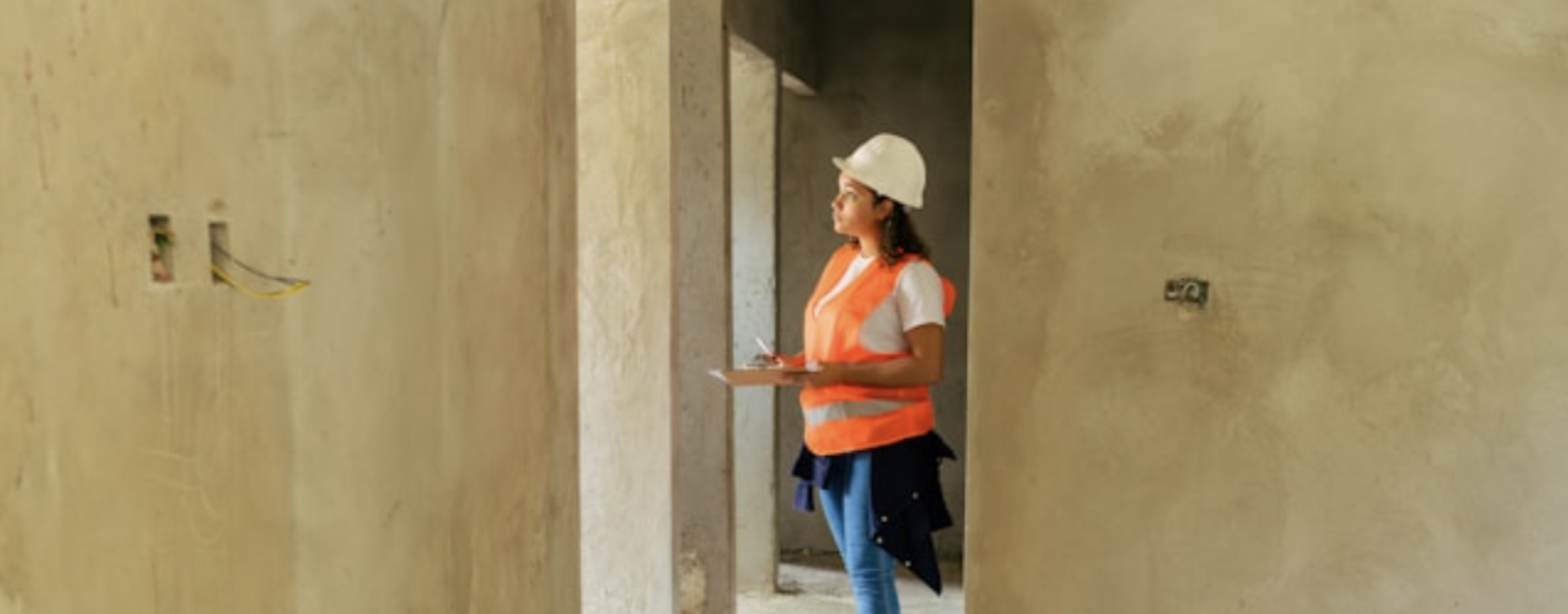
Photo by Andy Quezada from Unsplash.
There is an old discipline among carpenters: measure twice, cut once. For the better part of two decades, our field has done the opposite with consumer technology. When social media began to grow, it felt like just another building material in the expansive structure that is our society. It was only to be used as a finishing product. It added style, interest, and color to the space. It was not until much later we realized it was slowly attaching itself to load-bearing walls, brickwork, and the foundation of our lives. By the time the U.S. Surgeon General issued a public advisory on social media and youth mental health, we were trying to retrofit safeguards onto a material that integrated itself into the lives of a generation (Office of the U.S. Surgeon General, 2023). We heard the creaking and cracking in the walls and called it the settling of a new house. We were not wrong that something was wrong in there. We were only late.
I raise the comparison not to relitigate social media but because a far larger structure is now being added to the home—and this time the blueprints are still on the table. Artificial intelligence is being framed, wired, and painted at a pace that has outrun our capacity to study it. A second annual global survey of more than 18,000 adults across 23 markets found that adoption is plainly outpacing confidence: people are already delegating decisions to systems they do not understand and do not fully trust (EY, 2026). That gap between use and understanding is precisely the territory our discipline was built to map. And yet, as the architecture rises, psychologists are too often watching from the boat tour on the Chicago river.
Let me be clear about what I am not arguing. I am not a catastrophist, and this is not a call to fear. The benefits of these tools are real and, in some domains, profound—gains in creative efficiency, in access to expertise, in the analysis of human behavior at scales we could never reach with self-report and the lab alone. A consensus statement by some of the field’s most prominent computer scientists is candid about both the promise and the lag: capabilities are advancing rapidly while “AI safety research is lagging,” and present governance lacks the institutions to keep pace (Bengio et al., 2024). The danger is not that AI is malicious. The danger is that we will repeat our habit of arriving after the mold has spread, the foundation has cracked, and the studs are rotting behind the drywall.
Here is the harder truth for us as practitioners. The questions that matter most about these tools are not, at root, engineering questions. They are psychological ones. How does a person form trust in a system whose reasoning is opaque? When does fluency get mistaken for understanding, or confidence for competence? What happens to a developing identity that grows up conversing with a synthetic interlocutor that never tires, never disagrees too sharply, and never leaves? These are not edge cases. They are the load-bearing walls of human experience—attachment, influence, belief, judgment—and they are being reshaped by design choices made largely without us. As one recent comment in Communications Psychology observed, the discipline that has spent a century studying social influence is strangely absent from the research programs now shaping the most powerful influence technology ever built; of the major initiatives studying generative AI, the authors note pointedly, “none are led by Psychology” (Smith et al., 2024). The American Psychological Association has made the same case in plainer terms: AI is built by humans and inserted into human systems, so a psychological understanding of humans ought to be central to how it is designed and governed—not consulted as an afterthought (APA, n.d.).
This is where I want to offer a second image, because I think it explains both our absence and the way back in. Right now, the story of AI is being written by its engineers and its marketers. Psychologists are being handed the manuscript at the galley-proof stage and asked to catch the typos—to flag a bias here, a harm there—when the plot has already been locked. We have become excellent copy editors of a narrative we never helped develop. But copy editing is not authorship. If we want a say in how this story turns out, we have to get into the writers’ room, and we have to do it while the outline is still in pencil. The affordances of these systems—what they make easy, what they make tempting, what they quietly make normal—are being decided now, in design reviews and product roadmaps, not in the regulatory hearings that will come years later. Influence is engineered upstream; harm is studied downstream. We keep showing up downstream.
The cost of arriving late is not abstract. Stanford’s long-horizon assessment of the field warned years ago that AI systems were already being used to manufacture disinformation, simulate consensus, and erode the shared sense of reality on which a society depends (One Hundred Year Study on Artificial Intelligence [AI100], 2021). Those harms did not require a science-fiction superintelligence. They required only ordinary tools deployed faster than anyone thought to ask what they would do to people. That is the social-media pattern exactly: a technology that is socially disruptive long before it is dramatically dangerous, and that becomes nearly impossible to renovate once a generation has moved in and moved on.
So what does getting into the writers’ room actually look like for us? It looks like psychologists embedded in design and evaluation, not just sitting on advisory boards convened after launch. It looks like research programs—led by us, not merely informed by us—on how the specific technical features of these systems harness and reshape psychological processes, so that mitigations can be built in by design rather than bolted on by recall (Smith et al., 2024). It looks like training the next cohort of psychologists to treat AI literacy the way we treat statistical literacy: as a basic instrument of the craft, not an elective curiosity. And it looks like raising our collective voice in the places where standards are actually set, while the standards are still soft enough to shape.
We have, this once, a genuine advantage we did not have with social media: we have inspected the homes built by this industry already and have a better sense of the materials, the building practices, and what to look for. The contractor is still on site. The framing is going up. We can still decide whether it passes inspection or the walls need to be torn down and put up properly. We have the tools to measure the grading around the house to avoid it flooding the neighbor’s yard. But that window of influence is closing. The tools will keep getting built bigger and bigger whether or not we participate. The only variable still in our hands is whether the people who understand human beings best are in the room when the decisions about human beings get made.
We were late to social media, and we have spent a decade trying to rehab a poorly built house. We need not be late again. But not being late requires that we stop waiting to be invited to read the manuscript—and start insisting on a seat in the writers’ room.
References
American Psychological Association. (n.d.). Artificial intelligence. APA Services. https://www.apaservices.org/advocacy/issues/technology-behavior/artificial-intelligence
Bengio, Y., Hinton, G., Yao, A., Song, D., Abbeel, P., Darrell, T., Harari, Y. N., Zhang, Y.-Q., Xue, L., Shalev-Shwartz, S., Hadfield, G., Clune, J., Maharaj, T., Hutter, F., Baydin, A. G., McIlraith, S., Gao, Q., Acharya, A., Krueger, D., … Mindermann, S. (2024). Managing extreme AI risks amid rapid progress. Science, 384(6698), 842–845. https://doi.org/10.1126/science.adn0117
(2026, March 27). EY survey: Autonomous AI is no longer theoretical as adoption grows despite ongoing trust concerns. https://www.ey.com/en_gl/newsroom/2026/03/ey-survey-autonomous-ai-is-no-longer-theoretical-as-adoption-grows-despite-ongoing-trust-concerns
Office of the U.S. Surgeon General. (2023). Social media and youth mental health: The U.S. Surgeon General’s advisory. U.S. Department of Health and Human Services. https://www.hhs.gov/sites/default/files/sg-youth-mental-health-social-media-advisory.pdf
One Hundred Year Study on Artificial Intelligence (AI100). (2021). Gathering strength, gathering storms: The one hundred year study on artificial intelligence (AI100) 2021 study panel report. Stanford University. https://ai100.stanford.edu/gathering-strength-gathering-storms-one-hundred-year-study-artificial-intelligence-ai100-2021-1-0
Smith, L. G. E., Owen, R., Cork, A., & Brown, O. (2024). How and why psychologists should respond to the harms associated with generative AI. Communications Psychology, 2, Article 60. https://doi.org/10.1038/s44271-024-00110-8

By Kristian A Alomá, PhD
Past President, Society for Media Psychology and Technology
kristian@threadlinebranding.com
Join Division 46
The Society for Media Psychology and Technology is accepting new members!
Follow Division 46:
More From Spring/Summer 2026
What the Media Does to the Mind—And What Psychology Must Do About It
President’s Column, by Lawrence M. Drake II, PhD
Before the House Is Built: Psychology's Narrowing Window in the Age of AI
Past President’s Column, by Kristian A. Alomá, PhD
From Facilitator to Participant: Our Evolving Relationship with Media and Technology
President-Elect’s Column, by Christopher L. Heffner, PsyD, PhD
Social Media and the Shifting Semiotics of the Tiny Microphone
Editor’s Column, by Perry A. Reed, PhD
Review of Understanding Parasocial Relationships
By Jessie Buttafuoco, MA
Consumption at its Finest!: The Mental Health Risks Promoted by Social Media Fast Fashion
By Abbigail McGee & K. Megan Hopper, PhD
What We’re Missing About Age, Race and Polarization
By Scott M. Debb, EdD
The Cloud is a Media Psychology Marketing Metaphor
By Bernard Luskin, EdD, MFT
The Verdict That Named Developmental Vulnerability as Corporate Responsibility
By Melinda Karth, PhD & Kate Blocker, PhD