
Book Review
Review of Understanding Parasocial Relationships
In the crowded landscape of media psychology, parasocial relationships continue to command the spotlight. Scholars have spent decades researching how audiences form meaningful connections with celebrities, fictional characters, and other mediated figures across a variety of mediated domains. In Understanding Parasocial Relationships, Gayle Stever presents a comprehensive and accessible review of parasocial relationships, synthesizing decades of research while highlighting contemporary developments in our ever-changing digital media landscape.
The fortitude and confidence it takes to complete a project like this is admirable. As one of the leading scholars in parasocial relationship research, Stever draws upon her own extensive bodies of work and broader scholarly literature to provide readers with a thorough overview of the psychological mechanisms through which media figures become meaningful participants in our personal narratives. This text is scholarly, engaging, and highly relevant to today’s experiences with media in all formats.
One of the book’s greatest strengths lies in its successful integration of parasocial theory within broader psychological paradigms. Drawing on a diverse body of empirical research, Stever situates parasocial relationships and interactions within established frameworks such as attachment theory, developmental psychology, social learning theory, social identity theory, and Jungian psychology. In doing so, she demonstrates how parasocial experiences influence identity development, social connection, and meaning-making throughout our lifespan.
One of the book’s most significant contributions is its consistent emphasis on the psychological functions served by parasocial relationships. Whether through identity exploration, emotional regulation, meaning-making, or social support, Stever demonstrates that these relationships often fulfill important psychological needs. As a therapist, I found the concluding chapter especially compelling in its discussion of well-being, self-determination, narrative engagement, and therapeutic applications.
Although the book is remarkably comprehensive, there remains an opportunity for future expansion. As both a media psychologist and crime survivor advocate, I would welcome future scholarship from Stever applying parasocial theory to true crime media, victim-centered narratives, and digital communities surrounding public trauma. Given the growing influence of true crime, her expertise could offer valuable insights into how mediated relationships shape empathy, advocacy, moral judgment, and public understandings of victimization and survivorship.
Overall, Understanding Parasocial Relationships is a timely and substantial contribution to media psychology, underscoring the central role mediated relationships play in shaping identity, connection, and meaning in contemporary life. Through its integration of theory, empirical research, and contemporary examples, the book serves as both an introduction for people new to the psychology scene and a valuable synthesis for established scholars. It is likely to become a foundational resource for researchers, students, clinicians, and media professionals seeking to understand how mediated relationships shape human thought, emotion, and behavior.

By Jessie Buttafuoco, MA
Fielding Graduate University
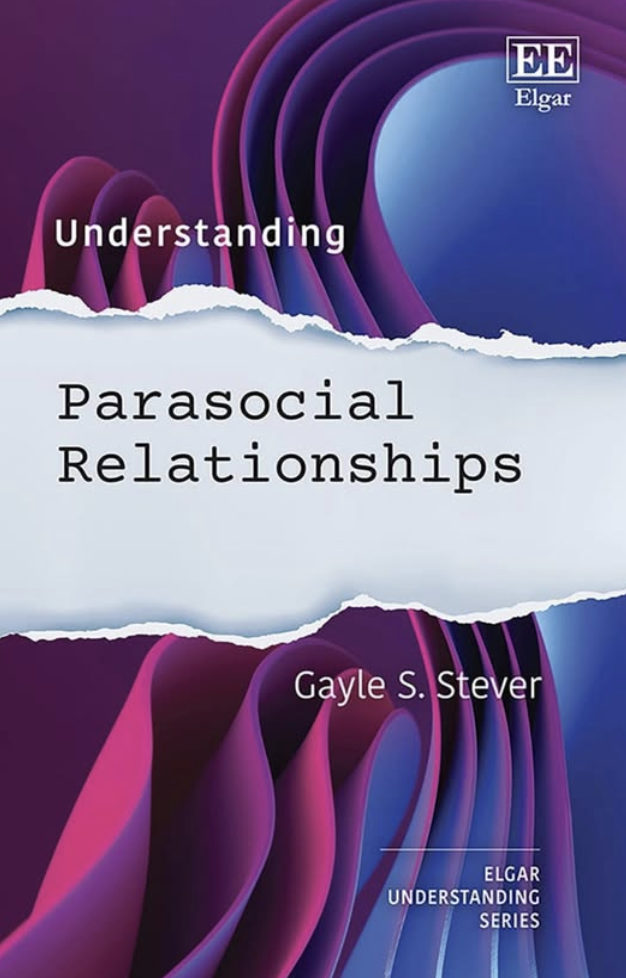
Edward Elgar Publishing. https://doi.org/10.4337/9781035355945
Follow Division 46:
More From Spring/Summer 2026
What the Media Does to the Mind—And What Psychology Must Do About It
President’s Column, by Lawrence M. Drake II, PhD
Before the House Is Built: Psychology's Narrowing Window in the Age of AI
Past President’s Column, by Kristian A. Alomá, PhD
From Facilitator to Participant: Our Evolving Relationship with Media and Technology
President-Elect’s Column, by Christopher L. Heffner, PsyD, PhD
Social Media and the Shifting Semiotics of the Tiny Microphone
Editor’s Column, by Perry A. Reed, PhD
Review of Understanding Parasocial Relationships
By Jessie Buttafuoco, MA
Consumption at its Finest!: The Mental Health Risks Promoted by Social Media Fast Fashion
By Abbigail McGee & K. Megan Hopper, PhD
What We’re Missing About Age, Race and Polarization
By Scott M. Debb, EdD
The Cloud is a Media Psychology Marketing Metaphor
By Bernard Luskin, EdD, MFT
The Verdict That Named Developmental Vulnerability as Corporate Responsibility
By Melinda Karth, PhD & Kate Blocker, PhD